The Invisible Edge: What Champions Do That Never Makes the Highlight Reel
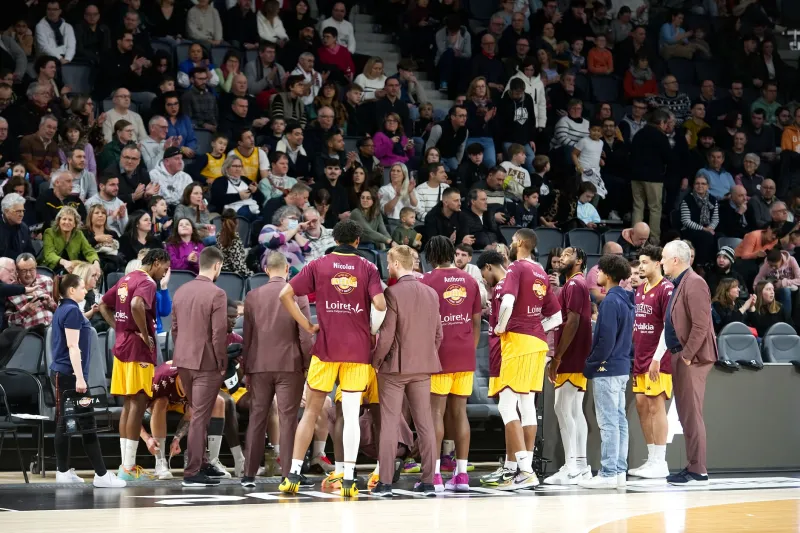
Every championship celebration looks the same from the outside. Confetti, trophy, somebody crying on the court. What you don't see is the thousand tiny decisions that made it possible — the ones that never appeared in any box score, never trended on social media, and never made SportsCenter's top ten.
The truth is, the box score is a highlights package in disguise. It shows you the spectacular. It completely ignores the surgical.
What the Numbers Miss
Let's start with something simple: positioning. In basketball, the difference between a good defensive team and a great one often comes down to where players stand when the ball is on the opposite side of the floor. That's called weak-side positioning, and it doesn't generate a stat. Nobody gets credit for being in the right place before the play even develops. But championship teams do it consistently, and it's a massive reason why they generate fewer open threes against them than teams with comparable individual defenders.
The NBA's player tracking data — the kind that lives deep inside second-screen apps and coaching staff tablets — tells a different story than the traditional line. It tracks things like contested shot rate, closeout speed, and something called "screen navigation efficiency," which basically measures how quickly a defender recovers after fighting through a pick. None of that shows up next to points, rebounds, and assists. But coaches obsess over it, because those numbers predict winning far better than a player's scoring average ever could.
The same principle applies in football. The NFL's Next Gen Stats platform has been tracking things like separation distance, route efficiency, and time to throw for years now. A quarterback who releases the ball 0.3 seconds faster than average isn't just impressive — he's statistically less likely to take sacks, more likely to hit receivers in stride, and more likely to convert on third down. That 0.3 seconds is invisible to a casual viewer. To a defense coordinator, it's the difference between a game plan that works and one that gets shredded.
The Small Decisions That Shift Everything
Take last season's NBA playoffs. Several teams with superior regular-season records exited earlier than expected, and the pattern was consistent: they were getting beaten in transition defense. Not by a lot. But by enough. When a team gives up just three or four extra fast-break points per game across a seven-game series, that's potentially 20+ points handed over. That's a game. That's a series.
What causes transition breakdowns? Mostly effort and awareness — two things that don't generate stats but absolutely generate outcomes. A guard who sprints back after a missed three-pointer instead of watching it fall is doing something that will never appear in any line. But his team will win more games because of it.
In the NFL, the equivalent is something like run-fit discipline. A linebacker who fills his gap correctly on a zone run doesn't get a tackle for loss. He gets nothing in the box score. But the running back gets stuffed for two yards instead of cutting outside for eight, and the drive stalls. Championship defenses are built on players doing exactly that, over and over, without any statistical recognition.
Situational Awareness: The Championship IQ
There's a reason analysts and coaches talk endlessly about "situational football" or "situational basketball." It refers to a team's ability to execute correctly when the context of a game changes — when it's late, when the stakes are high, when the margin for error has disappeared.
Advanced tracking data has started to quantify some of this. Win probability models can show you exactly which possessions or plays shifted a game's outcome most dramatically. And what those models consistently reveal is that the decisive moments are rarely the big highlight plays. They're the mundane ones executed at critical times.
A corner who jams a receiver at the line on third-and-six in the fourth quarter, forcing an incompletion that kills a drive — that's a play that might not even show up in his stat line. No tackle, no interception. But the win probability model knows that play mattered enormously. The box score doesn't.
The Intangible That Isn't Really Intangible
Coaches and analysts love to talk about intangibles. Grit. Leadership. Clutch. For a long time, those words were a way of describing things we could feel but couldn't measure. The interesting thing is that data is slowly catching up to intuition.
Something like "clutch rating" in the NBA — which measures performance specifically in close-game, late-game situations — is now a real, tracked metric. And the results are fascinating. Some players who look like stars in the regular season perform significantly worse when games tighten up. Others, players who might have modest overall numbers, elevate in exactly those moments.
The same is true at the team level. Teams with strong late-game execution records, even controlling for roster talent, tend to outperform their preseason projections. They've built something that doesn't show up in any individual stat line — a collective habit of doing the right thing when it's hardest.
What Separates Good From Great
Here's the honest answer: it's a lot of small things, done consistently, by a group of people who've bought into doing them even when there's no immediate reward.
The box score is a record of outcomes. Championship teams are built on process — on the positioning before the steal, the communication before the coverage, the sprint back before the fast break even develops. That's where the real game is played.
Next time you're watching a team that just can't seem to close out a big series, look past the scoring totals. Watch where the off-ball defenders are standing. Watch how quickly the offense resets after a turnover. Watch whether players are talking to each other between plays.
The champion is usually the team doing all of that right. They just never get a stat for it.