Home Comforts and Road Warriors: Why Some Athletes Are Totally Different People Depending on the Venue
Imagine you're great at your job — but only when you're sitting at your own desk. Put you in someone else's office, in an unfamiliar building, with people staring at you from the hallway, and suddenly you're just... fine. Not bad. Not great. Just fine.
For a surprising number of professional athletes, that's basically the reality. The home/road performance split is one of sports' most fascinating and underappreciated phenomena. It's not just about crowd noise or travel fatigue. It's about comfort, identity, and the deeply human need to feel like you belong in the space you're competing in.
Some players are transformed by their home crowd. Others — the rare, fascinating breed — actually seem to come alive when everyone in the building wants them to fail.
The Players Who Feed Off Their Own Crowd
Let's start with the most well-known version of this story: the home hero.
During his prime years with the Cleveland Cavaliers, LeBron James was almost unplayable at home. The Quicken Loans Arena crowd gave him something — energy, a sense of mission, a kind of protective electricity — that clearly translated onto the court. His playoff performances in Cleveland were on another level compared to most of his road outings, and anyone who watched those games understood intuitively why. The crowd wasn't just watching LeBron. It felt like they were running with him.
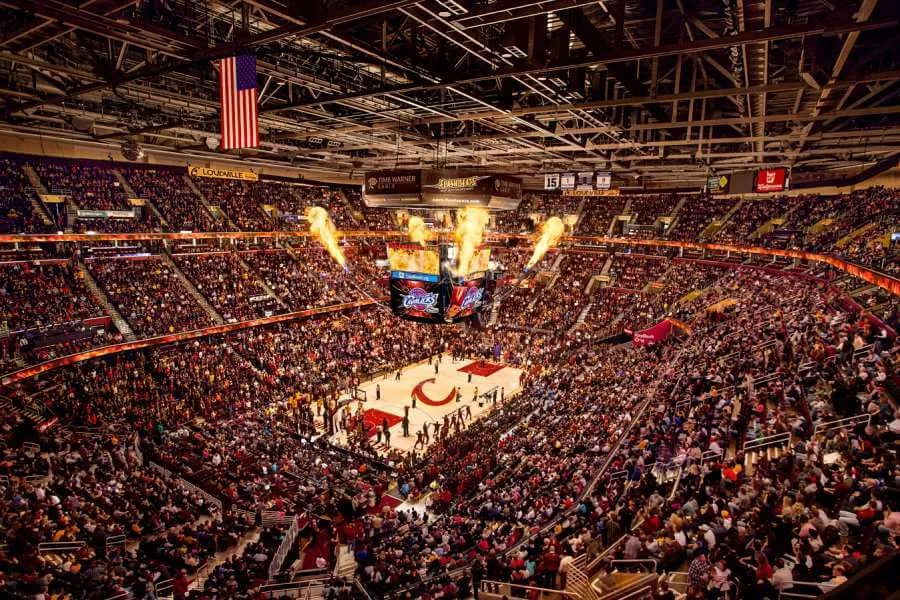 Photo: Quicken Loans Arena, via sportsmatik.com
But this goes beyond superstars. Look at Russell Westbrook during his Oklahoma City years. In the Paycom Center, Westbrook was a force of nature — triple-doubles flowing naturally, the crowd amplifying every drive to the basket like a feedback loop between player and fans. On the road, facing hostile arenas, the energy sometimes curdled into frustration. The same relentless aggression that made him electric at home occasionally worked against him when the crowd wasn't fueling the fire.
The psychological mechanism here is pretty straightforward: familiar environments reduce cognitive load. When an athlete doesn't have to think about the crowd, the noise, the vibe — when all of that becomes background comfort rather than active distraction — they free up mental bandwidth for the actual game.
The Road Warriors Who Thrive in Enemy Territory
And then there's the other kind. The players who genuinely seem to elevate when the crowd turns against them.
Kobe Bryant was famously one of these. There's a documented pattern across his career of Kobe producing some of his most jaw-dropping performances in hostile road environments — Madison Square Garden, Boston Garden, arenas where the crowd came ready to boo him from tip-off. The hostility seemed to activate something in him. He didn't just handle the road; he appeared to prefer it.
In the NFL, Patrick Mahomes has shown a version of this quality. His road playoff record is extraordinary — he's delivered some of his most composed, clutch performances in stadiums where tens of thousands of fans were doing everything possible to rattle him. There's a coolness to Mahomes in those situations that suggests the noise doesn't register as pressure. It registers as fuel.
What separates the road warriors psychologically? Sports psychologists often point to a combination of intrinsic motivation and emotional regulation. Players who rely heavily on crowd energy for their confidence are, in a sense, outsourcing part of their mental game to the fans. Players who generate their own internal drive can walk into any building and recreate the same competitive state. They don't need the crowd. They just need the game.
The NFL's Quietest Home Field Advantage
In football, the home/away dynamic plays out differently than in basketball. The crowd can't affect a quarterback's vision or a receiver's route, but it absolutely can affect communication — and that's where things get interesting.
The Kansas City Chiefs at Arrowhead Stadium are the gold standard here. The noise levels at Arrowhead are genuinely among the loudest ever recorded at a sporting venue. Opposing offenses have to go to silent snap counts, change their communication systems entirely, and essentially learn a new way to function just to survive a road trip to Kansas City. That's an enormous competitive advantage, and it has directly contributed to the Chiefs' remarkable home record in recent seasons.
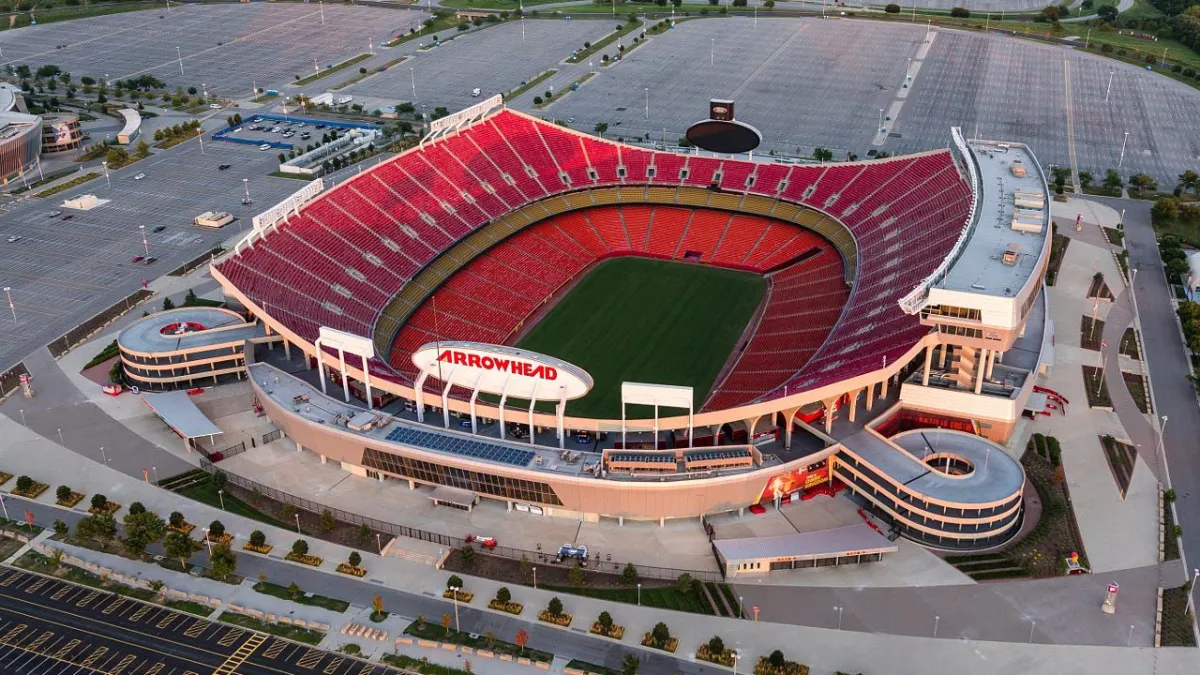 Photo: Arrowhead Stadium, via hitthatline.com
But flip it around: the Chiefs' offense — Mahomes included — has to learn to function without that roar when they go on the road. The transition from playing in a stadium that's essentially a wall of sound to playing in a quieter environment is a real adjustment, and not every team makes it cleanly.
What This Actually Tells Us About Mental Game
Here's the thing that makes this topic genuinely compelling beyond the fun of comparing stats: the home/away split is essentially a window into an athlete's psychological infrastructure.
The players with the smallest home/away gap — the ones who are consistently excellent regardless of the environment — tend to be the ones with the most developed internal mental frameworks. They've done the work. They've built routines and mental anchors that travel with them, so the zip code genuinely doesn't matter.
The players with the biggest splits aren't necessarily weaker athletes or lesser competitors. They might just be more emotionally wired to their environment — which in the right setting is actually a superpower. A player who feeds off their home crowd can be absolutely unguardable in that building. The vulnerability only shows up when you take them out of it.
Either way, it's a reminder that the mental side of sport is just as real as the physical side — and a lot harder to measure on a box score.