Who Controls the Aux Cord: How Team Playlists Became the Ultimate Championship Strategy

Walk into any professional sports facility in America thirty minutes before game time, and you'll hear something that might surprise you: it's not the sound of coaches barking instructions or players running through final preparations. It's music. Loud, carefully curated, strategically chosen music that's become as essential to team preparation as film study and stretching routines.
Welcome to the era where controlling the team playlist carries almost as much responsibility as calling plays.
The Science Behind the Soundtrack
It turns out there's actual psychology behind why teams obsess over their music choices. Sports psychologists have found that the right songs can trigger specific emotional states, increase adrenaline production, and even improve team synchronization. But more importantly for locker room dynamics, music creates shared cultural moments that bond players together.
"When everyone in the room knows every word to the same song, you've got instant chemistry," explains Dr. Sarah Chen, a sports psychologist who works with several NBA teams. "Music breaks down barriers faster than almost anything else."
Take the Miami Heat's championship runs. Players consistently credit their pregame music sessions as a major factor in team cohesion. When guys from completely different backgrounds — different cities, different generations, different musical tastes — can vibe to the same playlist, it creates a shared identity that translates directly onto the court.
 Photo: Miami Heat, via basketballjerseyarchive.com
The Playlist Powerbrokers
In every successful locker room, there's usually one player who emerges as the unofficial DJ. These aren't always the superstars — sometimes it's the veteran role player or the rookie who happens to have impeccable taste. But whoever controls the aux cord wields serious influence over team culture.
Jimmy Butler famously took over playlist duties wherever he played, mixing everything from classic rock to contemporary hip-hop to create what teammates described as "the perfect energy blend." His playlists became so legendary that players would request specific songs for specific situations — one track for pregame warmups, another for halftime motivation, and a completely different vibe for post-victory celebrations.
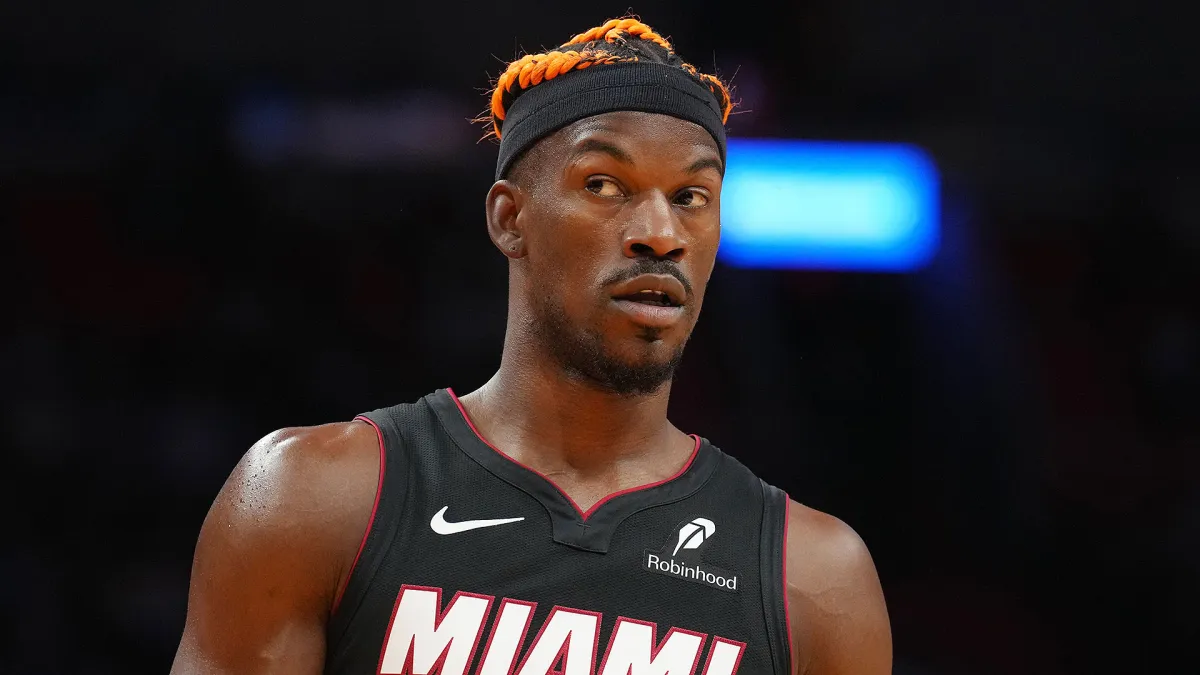 Photo: Jimmy Butler, via cdn.nba.com
Similarly, in the NFL, players like DK Metcalf and Ja'Marr Chase have become known for their ability to read the room and adjust the music accordingly. Need to calm nerves before a big game? They've got the perfect chill playlist. Time to get hyped for kickoff? They know exactly which tracks will get the entire team bouncing.
Genre Wars and Generational Gaps
Of course, managing music in a locker room full of strong personalities isn't always smooth sailing. Teams have to navigate serious musical diplomacy, balancing different generations, regions, and personal tastes.
The generational divide is particularly fascinating. Veteran players often gravitate toward the hip-hop and R&B they grew up with, while younger players want the latest TikTok-viral tracks. Smart teams find ways to blend both, creating playlists that honor the locker room hierarchy while keeping everyone engaged.
Geography plays a huge role too. West Coast teams tend to lean heavily into hip-hop, while Southern franchises might mix in more country and blues influences. East Coast teams often embrace the full spectrum of urban music culture. But the most successful teams find ways to transcend these regional preferences and create something uniquely their own.
The Streaming Revolution
Modern technology has completely transformed how teams approach music. Instead of one person controlling a single playlist, many teams now use collaborative Spotify playlists where every player can contribute. This democratic approach ensures everyone feels represented while creating fascinating musical melting pots.
Some teams take it even further. The Golden State Warriors famously created different playlists for different phases of their championship runs — one for regular season games, another for playoff intensity, and a special collection reserved exclusively for Finals games. Each playlist was carefully curated to match the emotional needs of that specific moment.
 Photo: Golden State Warriors, via fontmeme.com
The data shows it works. Teams with strong musical cultures tend to have better chemistry metrics, fewer locker room conflicts, and more sustained success over multiple seasons.
Beyond the Locker Room
The influence of team music culture extends far beyond pregame preparation. Players often credit shared musical experiences with helping them navigate difficult stretches of seasons, building friendships that last beyond their playing careers, and creating memories that define their time together.
LeBron James has talked extensively about how music helped bond his various championship teams. Whether it was the Miami Heat's Latin music influences, the Cavaliers' Cleveland-specific tracks, or the Lakers' West Coast vibe, each team developed its own musical identity that reflected both the city they represented and the personalities in the locker room.
The New Competitive Edge
As teams continue searching for any possible advantage, music has emerged as a legitimate competitive tool. Some franchises now employ music consultants or work with streaming platforms to analyze which songs create optimal psychological states for different types of games.
It might sound ridiculous, but when championship margins are measured in single possessions or split-second reactions, anything that can improve team chemistry and individual focus becomes valuable. The right song at the right moment can shift an entire team's energy level.
The Future Soundtrack
Looking ahead, expect team music culture to become even more sophisticated. Virtual reality workout sessions with synchronized soundtracks, AI-powered playlist generation based on team performance data, and real-time music adjustments based on game situations are all possibilities.
But at its core, the power of music in sports will always come back to something fundamentally human: the way a great song can make a group of individuals feel like they're part of something bigger than themselves.
In an era where athletes are more connected to music culture than ever before, controlling the aux cord isn't just about entertainment — it's about creating the emotional foundation that championship teams are built on.
And honestly? That might be the most beautiful harmony of all.