The Names You Don't Know: Meet the Assistant Coaches Quietly Winning Games
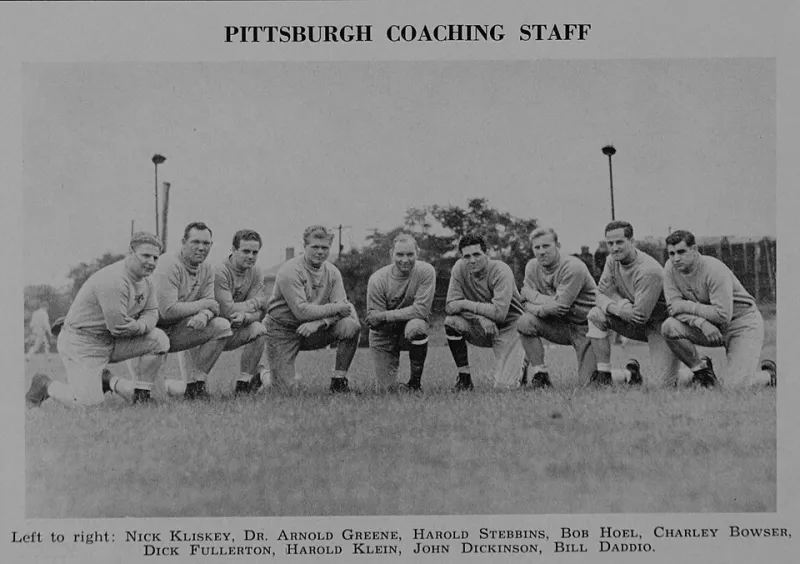
Photo: Published by the Duke University Athletic Association and Duke University Department of Public Relations, Public domain, via Wikimedia Commons
Quick quiz. Name the offensive coordinator for your favorite NFL team. Name the player development coach who's been working with that young point guard who suddenly looks like an All-Star. Name the pitching coach who rebuilt a struggling starter's mechanics over the winter.
If you're drawing a blank, you're not alone — and you're also missing some of the most important people in American sports.
We live in an era of unprecedented athlete visibility. Players have Instagram accounts with millions of followers, their own YouTube channels, their own signature sneakers. Head coaches get documentary series and press conferences and hot-take segments dedicated entirely to their decision-making. But the assistant coaches and coordinators who actually design the plays, develop the players, and make the halftime adjustments that flip games? They operate in almost complete anonymity — and that's a problem for anyone who actually wants to understand how sports work.
The Real Architects of the Offense
In the NFL, the offensive coordinator is arguably the second most important person in any building, and on some teams, arguably the first. They design the game plan. They call the plays. They figure out how to exploit a defense's weaknesses in real time, in front of 70,000 fans and millions of television viewers, under pressure that would break most people.
When an offense looks creative and explosive, the quarterback gets the credit. When it looks stagnant and predictable, the quarterback gets the blame. The coordinator — the person who actually scripted the opening drive, designed the route combinations, and decided to go for it on fourth-and-two — might as well be invisible.
Kliff Kingsbury spent years as a college offensive coordinator developing quarterbacks and building spread offenses before getting his shot in the NFL. Mike McDaniel, now the head coach of the Miami Dolphins, spent over a decade as an offensive assistant refining his understanding of run concepts and personnel groupings. Both of these guys were doing critically important work for years before anyone outside of football operations knew their names.
The Player Development Coach: Sports' Best-Kept Secret
In the NBA, player development coaches might be the most underappreciated professionals in all of sports. These are the people who show up before anyone else and stay after everyone leaves, working with players on specific skills — footwork, shot mechanics, finishing packages — that show up as improved statistics months later.
When a young guard goes from inconsistent bench piece to reliable rotation player over a single offseason, the narrative usually credits the player's work ethic or the head coach's system. Rarely does anyone ask who spent 500 hours in the gym with that player, breaking down film, rebuilding his mid-range game from scratch, and building the confidence that made the difference.
The player development pipeline is where franchises are actually built. The San Antonio Spurs, who turned late-round picks and overlooked veterans into contributors for three decades, were legendary for their player development staff. Coaches whose names you'd struggle to find on a Google search were central to one of the most successful organizational runs in NBA history.
The Pitching Coach Whisperer
In baseball, the pitching coach relationship is one of the most intimate in sports. These coaches work with pitchers on mechanics, sequencing, pitch design, and mental approach — a combination of technical expertise and psychological coaching that is genuinely complex and genuinely impactful.
When a pitcher reinvents himself mid-career — suddenly adding three inches of movement to a slider, or discovering a new grip that turns a mediocre changeup into a weapon — it almost never happens in isolation. There's a pitching coach in the background who identified the problem, proposed the solution, and spent weeks working through adjustments that could've easily made things worse before they got better.
Dave Duncan, who spent decades as a pitching coach for the Oakland A's and St. Louis Cardinals, was one of the most influential figures in baseball for 30 years. His ability to identify what a pitcher needed and deliver it quietly — without press conferences or social media — helped build multiple playoff rosters. Most casual baseball fans couldn't have picked him out of a lineup.
Why Don't We Know These People?
Part of the answer is structural. The sports media ecosystem is built around names that drive clicks and faces that drive engagement. Players are the product. Head coaches are the brands. Everyone else exists in a supporting role that the media rarely has time — or incentive — to explore.
But part of it is also cultural. American sports fandom is deeply personality-driven. We want heroes and villains, stars and sidekicks. The idea that a 58-year-old defensive coordinator in a team-issued polo shirt might be more responsible for a championship than the franchise quarterback doesn't fit the narrative we've constructed around sports celebrity.
Social media has amplified this dynamic. Backup players with 800,000 followers get more coverage than the defensive backs coach who designed the scheme that just held the opposing offense to three points in the second half. We follow the people we can see. The most important people in the building are often the hardest to see.
The Ones Who Finally Get Their Moment
Occasionally, an assistant coach breaks through. Sean McVay was a relatively unknown offensive coordinator before becoming the youngest head coach in modern NFL history. Mike Shanahan spent years as an offensive coordinator developing ideas about zone-blocking and quarterback play that he'd eventually use to win two Super Bowls. Erik Spoelstra was a video coordinator before becoming one of the most respected head coaches in the NBA.
The pattern is consistent: years of invisible, essential work, followed by a moment of visibility that most people treat as an overnight success. It never is. It's always the product of a career spent doing important things in rooms nobody was watching.
Start Paying Attention
You don't have to become a film-room obsessive or memorize every coach's résumé to appreciate what's happening on the sidelines. But the next time your team makes a brilliant halftime adjustment, or a struggling player suddenly finds his game, or an offense completely dismantles a defense that looked unbeatable — take a second to ask who designed that.
The answer usually isn't on the back of anyone's jersey. But it's one of the most interesting questions in sports. The names you don't know are often the ones most worth knowing.