Feed Me the Boos: The Athletes Who Get Stronger the Louder the Road Crowd Gets

Photo by Photo by Kyle Richards on Unsplash on Unsplash
Home-field advantage is one of the most sacred concepts in sports. But there's a rare breed of competitor who doesn't just survive hostile road environments — they actually perform better in them. We're digging into the psychology, the players, and the science behind why some athletes turn enemy noise into pure rocket fuel.
There's a moment that happens in arenas and stadiums across America on a pretty regular basis. The visiting team's star player gets the ball, and the home crowd — tens of thousands of people who paid good money to be there — unloads on him. Boos, chants, noise cranked up to eleven. The kind of atmosphere designed to rattle, to distract, to make someone feel small.
And then the player scores. Or hits. Or throws a touchdown. And does it again. And again. Until the building goes quiet in that particular way that only happens when a crowd realizes it's made a terrible mistake.
This is the road warrior moment. And the athletes who live for it are a genuinely fascinating species.
Home-Field Advantage Is Real — Except When It Isn't
Let's acknowledge the baseline first. Home-field advantage is real, documented, and significant across every major American sport. Home teams win more often than road teams. The crowd noise disrupts communication, the familiar environment reduces stress, the travel fatigue is real for visitors. There are a hundred reasons why playing at home helps.
But the data also contains an anomaly that doesn't get discussed nearly enough: for a small subset of athletes, the road environment doesn't hurt performance. It enhances it.
Sports psychologists have studied this phenomenon for years, and the explanation is rooted in something called "arousal optimization." Most athletes perform best at a moderate level of psychological arousal — not too calm, not too keyed up. For the majority, a hostile road crowd pushes them past that optimal zone and into anxiety territory. But a smaller group of competitors actually needs higher arousal levels to hit their peak. The noise, the hostility, the pressure — it doesn't overwhelm them. It activates them.
Think of it like a car engine that only really hums when you push it hard. Most engines prefer cruising speed. Some are built for the redline.
The NBA's Road Warriors
Basketball gives us the clearest, most visible examples of this phenomenon, partly because NBA arenas are so loud and so intimate, and partly because individual performance is so easy to track.
LeBron James built a career-long reputation for showing up in hostile buildings. His record in arenas where the crowd was specifically rooting against him — from his early Cleveland days to the Miami years to his time in L.A. — is remarkable. There's a documented pattern of his performances elevating in games where the narrative surrounding him was most charged. When the crowd wanted him to fail most loudly, he tended to deliver his most memorable performances.
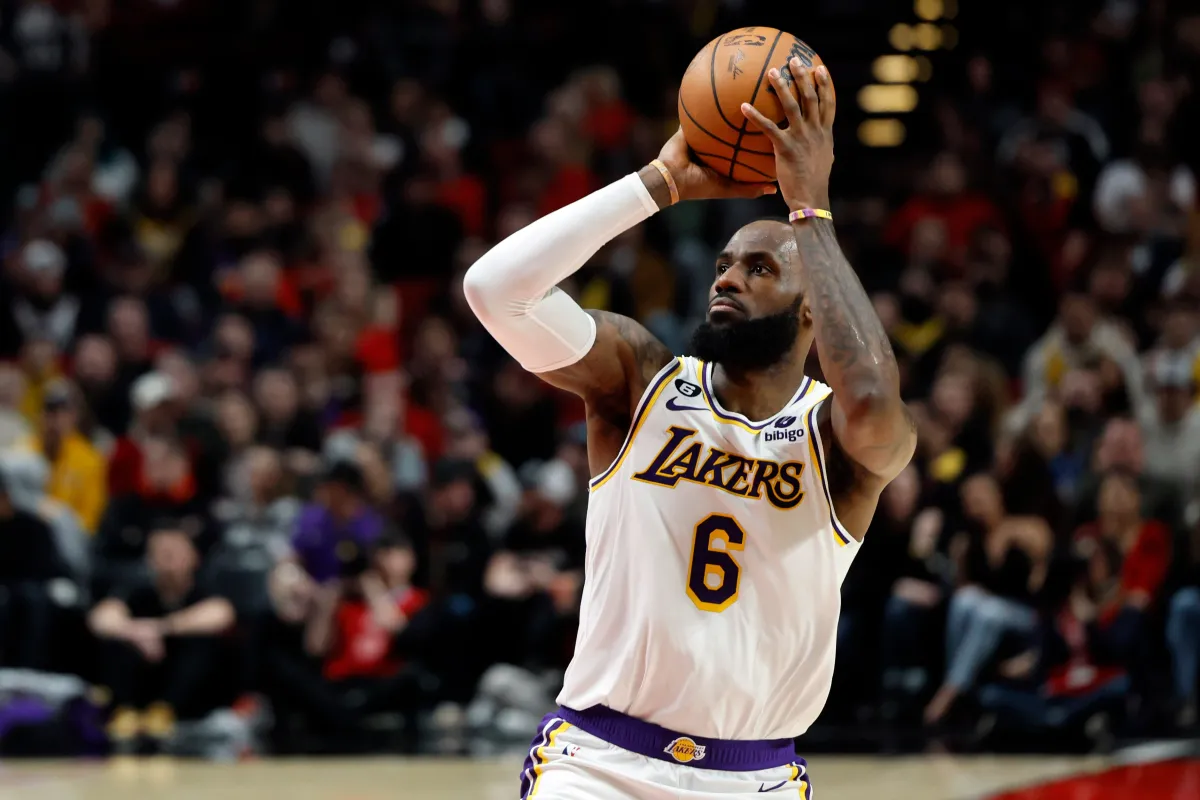 Photo: LeBron James, via www.gannett-cdn.com
But LeBron is almost too obvious an example. The more interesting cases are the players you might not immediately think of.
Damian Lillard built his entire identity around clutch road performances. His playoff moments — including some of the most iconic buzzer-beaters in recent memory — have often come in buildings where the crowd was fully invested in seeing him fail. Lillard has spoken openly about using crowd hostility as a focusing mechanism. "When they're loud against you, you know you're the one they're worried about," he once said. That reframe — turning the boo into a compliment — is a psychological trick that only certain wiring can pull off.
The NFL Version: Silence Is Loud
In football, road excellence looks different because the individual moments are harder to isolate. But the pattern still shows up, particularly at the quarterback position.
Patrick Mahomes has one of the most impressive road records of any quarterback in the modern era. His performances in playoff games on the road — in environments specifically engineered to rattle him — have consistently matched or exceeded his home performances. Part of that is talent, obviously. But part of it is something more specific: Mahomes appears to process hostile crowd noise as information rather than as pressure. He's talked about how loud road games actually help him focus, because the noise forces him into a kind of tunnel where only the play in front of him exists.
 Photo: Patrick Mahomes, via people.com
Josh Allen is another quarterback who seems to perform with a particular edge in road environments. There's a looseness to his game in hostile buildings that suggests the pressure is landing on him differently than it might on other players.
The common thread in both cases: these are quarterbacks who aren't trying to manage the environment. They're not trying to block out the noise. They're letting it in and using it.
College Basketball: Where Road Games Are an Art Form
If you want to see this dynamic at its most extreme, college basketball is the place to look. The atmospheres in places like Cameron Indoor Stadium, Allen Fieldhouse, and the Carrier Dome are genuinely unlike anything else in American sports. The crowds are close, they're organized, they're creative, and they are specifically focused on making visiting players miserable.
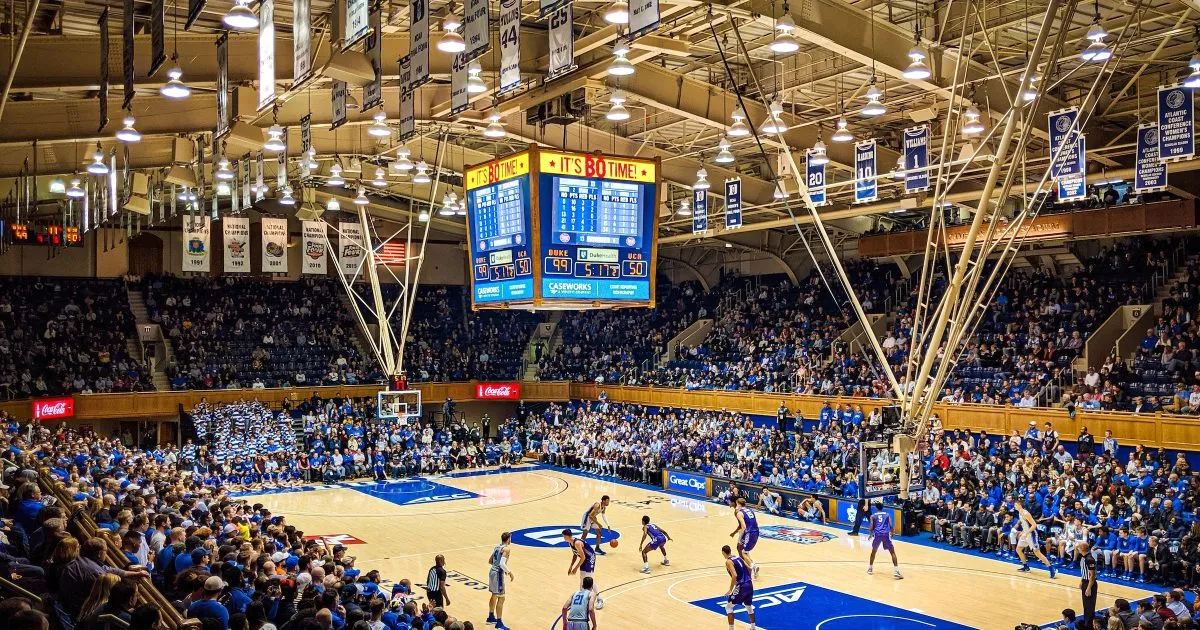 Photo: Cameron Indoor Stadium, via www.discoverdurham.com
And yet, certain players have built their reputations by performing brilliantly in exactly these environments. The great Duke teams of the Coach K era regularly faced this — visiting players who used the Cameron craziness as a stage rather than a gauntlet. And in the modern era, players who've grown up with social media and the constant noise of public attention seem increasingly wired to treat hostile crowds as just another form of that same pressure — familiar, manageable, maybe even energizing.
What Separates Them Psychologically
Sports psychologists point to a few consistent traits in athletes who thrive on the road. First, they tend to have what researchers call a "challenge response" rather than a "threat response" to pressure situations. When the stakes go up, they experience the physiological symptoms of stress — elevated heart rate, adrenaline spike — but interpret them as excitement rather than fear. Same chemical reaction, completely different mental framing.
Second, they tend to be less dependent on external validation. Home crowds are, in a basic way, a form of approval. Athletes who need that approval to perform well are more vulnerable when it disappears. Athletes who are internally motivated — who are playing for something inside themselves rather than for the crowd's reaction — don't feel that absence the same way.
Third, and maybe most interestingly, many road warriors describe a kind of freedom that comes with playing in hostile environments. When everyone in the building wants you to fail, there's no expectation to manage, no approval to maintain. You're already the villain. There's a strange liberation in that.
The Boo as Fuel
Here's the simplest way to think about it. For most athletes, a hostile crowd is a headwind — something to fight against, something that costs energy. For road warriors, it's a tailwind. The noise, the hostility, the organized chaos of a building full of people rooting for your failure — it pushes them forward rather than slowing them down.
The next time you're at a game and the crowd unloads on the visiting team's star player, watch his face carefully. If he smiles, if he nods, if there's any hint of satisfaction in how he's receiving that noise — you might be watching someone about to have the game of their life.
Some athletes don't just handle the boos. They need them.