Trial by Fire: What Happens When Young Athletes Get Thrown Into the Deep End Before They're Ready
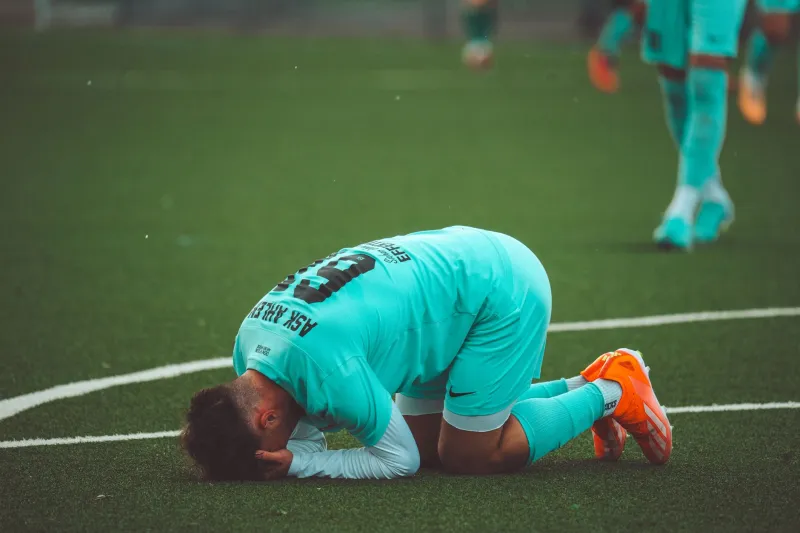
Trial by Fire: What Happens When Young Athletes Get Thrown Into the Deep End Before They're Ready
Imagine being nineteen years old and having the weight of an entire city's championship hopes sitting on your shoulders. Not in a practice setting. Not in a pickup game with friends. In a stadium packed with fans who've been waiting years for this, with cameras in your face and the entire internet ready to weigh in on every decision you make in real time. That's the reality facing a growing number of America's youngest professional and college athletes — and how they handle it is one of the most compelling stories in sports right now.
The Acceleration Nobody Planned For
The path from promising teenager to high-stakes competitor has never been shorter. In the NBA, lottery picks are handed starting roles on day one and expected to contribute meaningfully from their first game. In college football, true freshmen quarterbacks are running spread offenses in front of hundred-thousand-person crowds before they've had time to do their laundry twice. In tennis, teenagers are competing in Grand Slam main draws against hardened professionals who've been doing this for fifteen years.
 Photo: Grand Slam, via grandslam.blob.core.windows.net
This isn't a new phenomenon, but the intensity has ratcheted up in ways that make the previous era look almost gentle by comparison. Social media means that a bad game doesn't just disappear into the box scores — it becomes a meme, a clip package, a trending topic. The scrutiny is relentless, the opinions are instant, and the pressure never fully switches off.
So what actually separates the young athletes who thrive from the ones who get swallowed up?
The Ones Who Don't Blink
Watch closely and you'll notice something the pressure-proof young athletes share: they're almost weirdly present. Not cocky, not oblivious, just genuinely locked into the moment in front of them rather than the weight of everything surrounding it.
Think about the freshman quarterbacks who've stepped into massive programs this season and played with a kind of calm confidence that made veteran observers do a double-take. They weren't perfect — nobody expects perfection at nineteen — but they weren't playing scared, either. When they made mistakes, they moved on fast. When the game was on the line, their body language didn't change. That ability to stay level, to not let the moment get bigger than the play, is the single most important thing a young competitor can bring to a high-pressure environment.
In the NBA, you see it in the way certain rookies handle adversity during games. Getting scored on, turning the ball over, making a read that doesn't work — some young players visibly carry those moments into the next possession. The ones who thrive shake it off in real time. They've got short memories, not because they're not paying attention, but because they've trained themselves to process and move forward.
Tennis produces some of the clearest examples because the sport is so brutally individual. There's nowhere to hide on a tennis court. When a seventeen-year-old steps into a stadium match at a major tournament, every single point is a pressure test. The teenagers who handle it best tend to share one trait: they compete like they belong, even before they've fully earned the right to feel that way. That confidence, even when it's a little premature, becomes a self-fulfilling prophecy.
The Ones Who Feel the Weight
For every young athlete who thrives, there are others who discover that the gap between being talented and being ready for this specific environment is bigger than anyone told them. And it's important to say clearly: that's not a character flaw. It's a human response to an almost impossible situation.
College football has become particularly brutal in this regard. A five-star quarterback recruit arrives on campus carrying the expectations of a fan base, a coaching staff, and an NIL deal that made them feel like a professional before they'd taken a single college snap. The weight of that, combined with the complexity of a college offense and the speed of college defenders, can produce a very public unraveling that nobody — not the player, not the coaches, not the fans — is fully prepared for.
In the NBA, the mental load of being a high draft pick extends beyond the court. Young players are suddenly managing money, public profiles, teammate relationships, and media obligations at an age when most people their age are figuring out how to manage a class schedule. The ones who struggle aren't failing at basketball — they're often failing at the enormous life adjustment that comes attached to it.
What Actually Helps — and What Doesn't
The teams and programs that handle young talent best tend to do a few things consistently. They manage expectations publicly, creating space for young players to make mistakes without those mistakes becoming crisis narratives. They pair rookies and freshmen with veterans who've been through the pressure and can normalize it. And they're honest with young players about what's coming — not to scare them, but so the first time they experience a hostile road crowd or a nationally televised collapse, it doesn't feel completely alien.
What doesn't help? Throwing a twenty-year-old into a must-win situation with no support structure and calling it a growth opportunity. That's not development — it's exposure without scaffolding, and it produces as many broken confidences as it does breakthroughs.
The best young athletes also tend to have someone in their corner who isn't impressed by the hype. A parent, a coach from their youth days, a mentor who knew them before the spotlight found them. That grounding relationship is quietly one of the most important factors in whether a young competitor stays level when everything gets loud.
The Ones We're Watching Right Now
Across the NBA, college football, and the tennis circuit, there are young athletes right now who are in the middle of their own pressure test — some passing with flying colors, some visibly struggling, some somewhere in the complicated middle. The beauty of following sport closely is that you get to watch these stories play out in real time, without knowing the ending.
Some of the teenagers who look shaky right now will be completely different athletes in two years. Some of the ones who look fearless today will hit a wall they weren't expecting. The pressure test doesn't end after one good game or one bad stretch — it's ongoing, and the best competitors learn to treat it that way.
What we do know is this: the athletes who make it through the fire almost always say the same thing when they look back. It wasn't the talent that carried them. It was the decision, made over and over again, to stay in the moment, trust their preparation, and refuse to let the spotlight convince them they were smaller than they actually were.
That's a lesson that applies pretty far beyond sports — but it hits different when you're watching a nineteen-year-old figure it out in real time.